

CTVR Updates for March 11, 2026
Data centers might be housed underwater, powered by wind turbines--a San Francisco company will go live with a pilot this year. That's the good news. The ominous news harkens back to 1972.


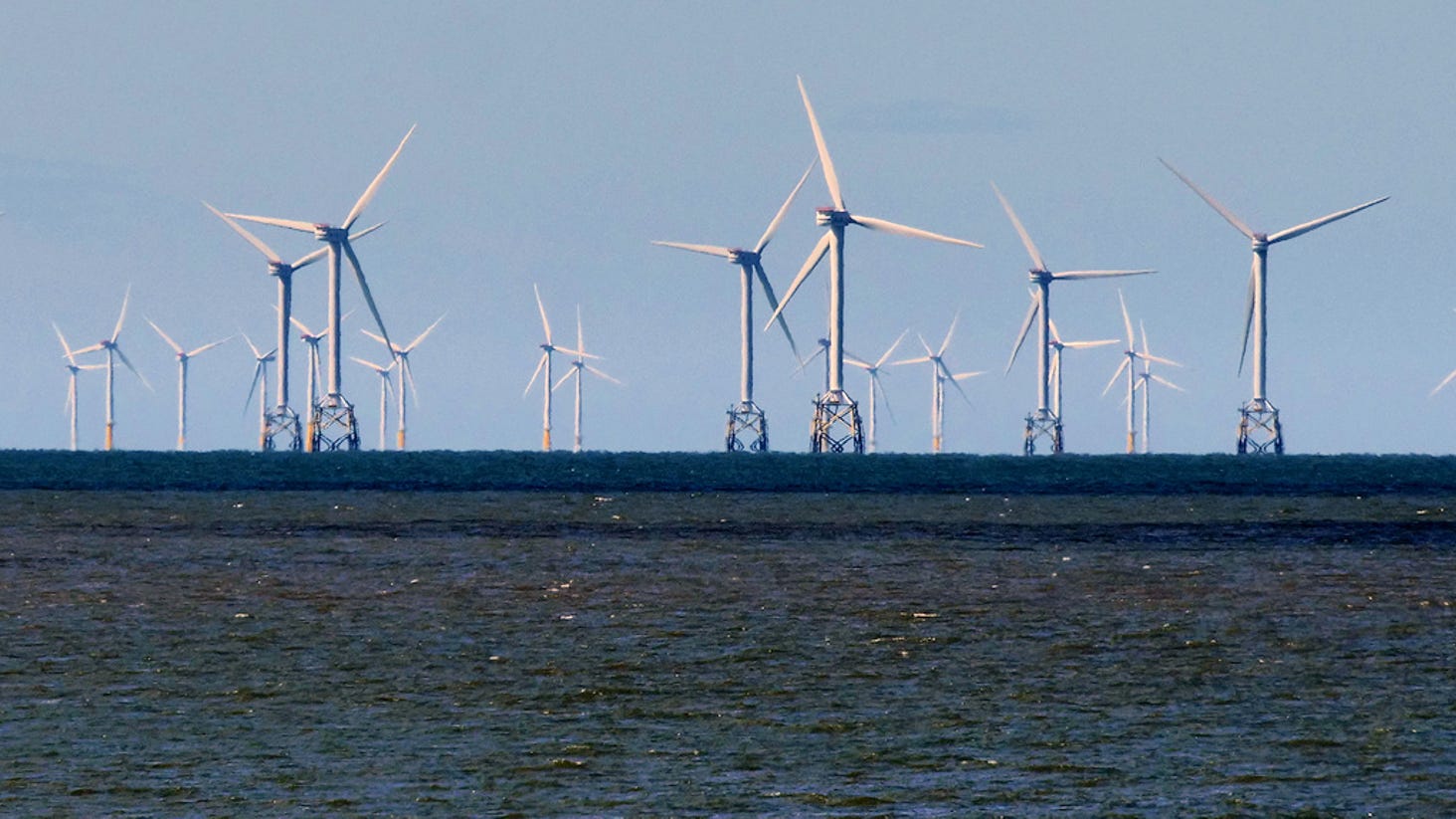
From underwater data centers powered by integrated wind turbines to sending desalinated water from California to Las Vegas and Phoenix—it is clear that climate tech ventures are trying to square the circle of resource overuse.
But the story that stood out to me the most this week was a scientific paper estimating that our carbon emissions are twice what the carrying capacity of our planet will bear. In 1972, a report called “Limits to Growth” attempted to model our planet’s economic and ecological system using the state-of-the-art computing power at the time. The report estimated that, on the pace we were at that time, civilization was headed for a population collapse sometime around the mid 21st century, driven by resource overuse and, crucially, an excess of pollution.
Close to home, in Erik’s part of the world—the Upper Midwest of North America—spring temperatures that are several degrees warmer than historical due to climate change threaten damaging weather. In Virginia’s neck of the woods—East Africa—climate change-attributed flooding is giving rise to increased cases of serious diseases.
Climate Technology
Floating Wind Turbines Host Data Centers Underwater
“San Francisco–based offshore wind-power developer Aikido Technologies... announced its plans to start housing data centers in the underwater tanks that keep its turbine platforms afloat. The turbines will supply the power for the servers, and onboard batteries and grid connection will provide backup.” (IEEE Spectrum)
How California could use desalination to help with Colorado River woes
“With desert cities like Phoenix and Tucson bracing for their allotments of Colorado River water to be slashed dramatically, San Diego County’s water agency could for the first time sell some of its water to other states by drawing on its ample supplies from the nation’s largest desalination plant.” (Los Angeles Times)
Climate Science
Carbon emissions now more than double the planetary boundary, analysis finds
“Earth is not infinite. Pollution beyond certain levels threatens the climate and ecosystems. To prevent this, scientists have proposed planetary boundaries, defining the safe operating limits of the Earth system... ‘When carbon emissions are compared using the same framework as nitrogen pollution, the severity of climate change becomes much clearer...’” (Phys.org)
Ocean temperatures may be protecting Earth from a planet-wide drought
“Ocean temperature patterns help prevent droughts from striking the entire planet at the same time. By creating shifting regional drought ‘hubs,’ climate cycles like El Niño limit global crop risk and may provide early warning signals for food security.” (ScienceDaily)
The “Wet-Gets-Wetter” Response to Climate Change Does Not Always Apply
“On very large scales, the precipitation response to warming is sometimes summarized as the “wet gets wetter and the dry gets drier.” A recent scientific paper by Sokol, et al. suggests that this pattern might not hold true for some regions, especially the Walker circulation in the Western and Eastern Pacific. (Eos.org)
Microbes hitchhiking on marine snow could limit how deep carbon sinks
“The findings, which appear this week in the Proceedings of the National Academy of Sciences, could explain how calcium carbonate dissolves in shallow layers of the ocean, where scientists had assumed it should remain intact. The results could also change scientists’ understanding of how quickly the ocean can sequester carbon from the atmosphere.” (Phys.org)
How farming perennial plants can help us in times of climate change, food insecurity and social division
“Perennial plants invest more energy in developing their root systems than their annual counterparts, allowing them to regenerate and persist. Not only can they be an abundant source of food, the way they are grown minimizes climate-warming emissions.” (Phys.org)
Climate Policy
California pushes for statewide water-conservation plan in fight against climate change
“Climate change is reshaping life in California through historic droughts and record storms that threaten the farms that feed the nation, communities that depend on reliable water, and the environment we all share,” Gov. Gavin Newsom said in a news release on Feb. 25. “The 2028 Water Plan is a commitment to every Californian that we will capture, store, and conserve the water our state — the 4th largest economy in the world — needs to thrive, no matter what climate change throws at us.” (Times of San Diego)
Climate change education legislation in Virginia advances further
“Specifically, the bill would require the board to “make available to each local school board instructional materials on climate change and environmental literacy that are based on and include peer-reviewed scientific sources” and also to “develop, adopt, and make available to each model school board model policies and procedures ... pertaining to the selection of instructional materials on climate change and environmental literacy.” (National Center for Science Education)
Reaching net zero by 2050 ‘cheaper for UK than one fossil fuel crisis’
“Renewable energy is much more efficient than fossil fuels, as well as being more difficult for foreign governments to interrupt. People will also benefit from warmer homes, cleaner air, more active travel and healthier diets, with less red meat – representing about £2bn to £8bn in savings a year to the NHS and individuals.” (The Guardian)
Climate Impact
Climate change is worsening water crisis for Canada’s largest First Nations population
“Six Nations of the Grand River is one of the most highly populated Indigenous communities in Canada with around 29,000 residents. A primary source of water is from the McKenzie Creek... According to a recent study, Ontario’s McKenzie Creek watershed is likely to face increasing levels of water scarcity throughout the rest of the century.” (Great lakes Now)
Human-caused climate change fuels early spring heat contributing to increasing severe weather risk across the central United States
“March is coming in like a lion across the central and eastern U.S. with severe weather and widespread abnormal warmth. Climate Central analysis shows that the unusually warm early springtime temperatures forecast for March 6, up to 34°F above-average across the Upper Midwest, are at least twice as likely due to human-caused climate change. The climate change-fueled spring warmth will also help increase the risk for severe weather across the Central Plains, potentially leading to strong thunderstorms, large hail, and tornadoes.” (Climate Central)
Climate change may not end skiing. But it will make it more exclusive
“Each winter, locals and tourists together support a sector that accounts for roughly €12 billion (about £10 billion) – that’s 0.5% of Italy’s national GDP, and a far higher percentage of the economy in mountain regions. Winter sports have become a major employer, as communities that once depended on seasonal farming and agriculture have progressively shifted to tourism. Yet the climate conditions that made this possible are changing.” (The Conversation)
Climate Change Alters Tanzania’s Disease Landscape: Rising Health Threats
“The changing weather patterns are already triggering a surge in respiratory infections after floods, alongside outbreaks of dengue fever, cholera and malaria — even in regions that once rarely experienced such diseases. In late February, Tanzania’s health authorities urged the public to exercise caution as cases of respiratory infections, including influenza and COVID-19, began rising alongside mosquito-borne dengue fever.” (Down To Earth)